Tag 1 · Station 1 von 12Day 1 · Stop 1 of 12
Fushimi InariFushimi Inari
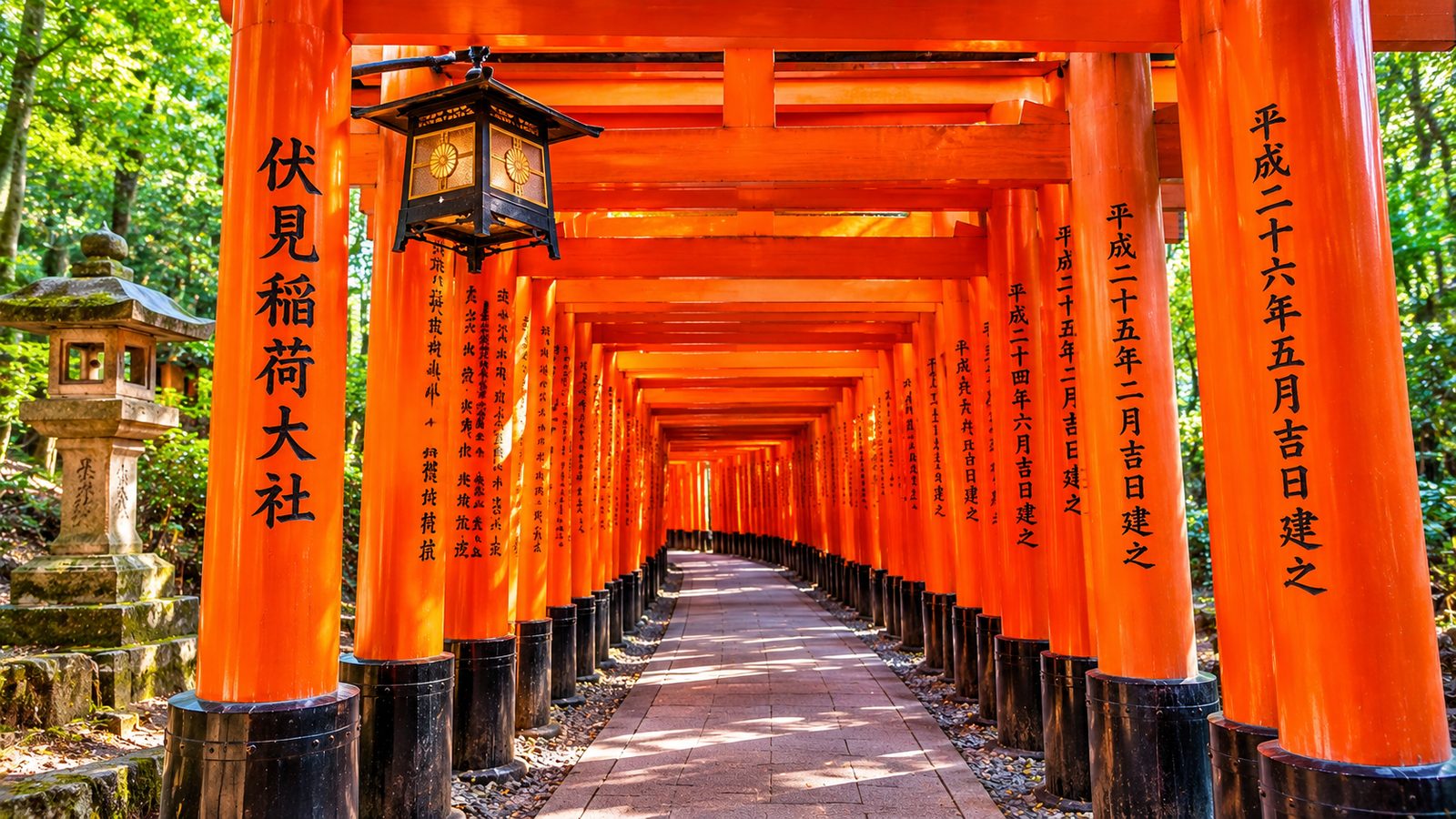
伏見稲荷大社 · Fushimi Inari-taisha
Der Tag beginnt mit einem der bekanntesten Bilder Japans: Ihr geht durch den Tunnel aus unzähligen roten Torii den heiligen Berg Inari hinauf. Euer Guide erzählt euch, warum die Tore gestiftet werden und was die Fuchsfiguren bedeuten.
The day begins with one of the best-known images of Japan: you walk through a tunnel of countless red torii up sacred Mount Inari. Your guide tells you why the gates are donated and what the fox statues mean.
Rote ToriiRed toriiFüchseFoxes
Euer MomentYour momentEin Foto im roten Torii-Tunnel, aufgenommen von eurem Guide.A photo in the red torii tunnel, taken by your guide.
Tag 1 · Station 2 von 12Day 1 · Stop 2 of 12
Kiyomizu-deraKiyomizu-dera
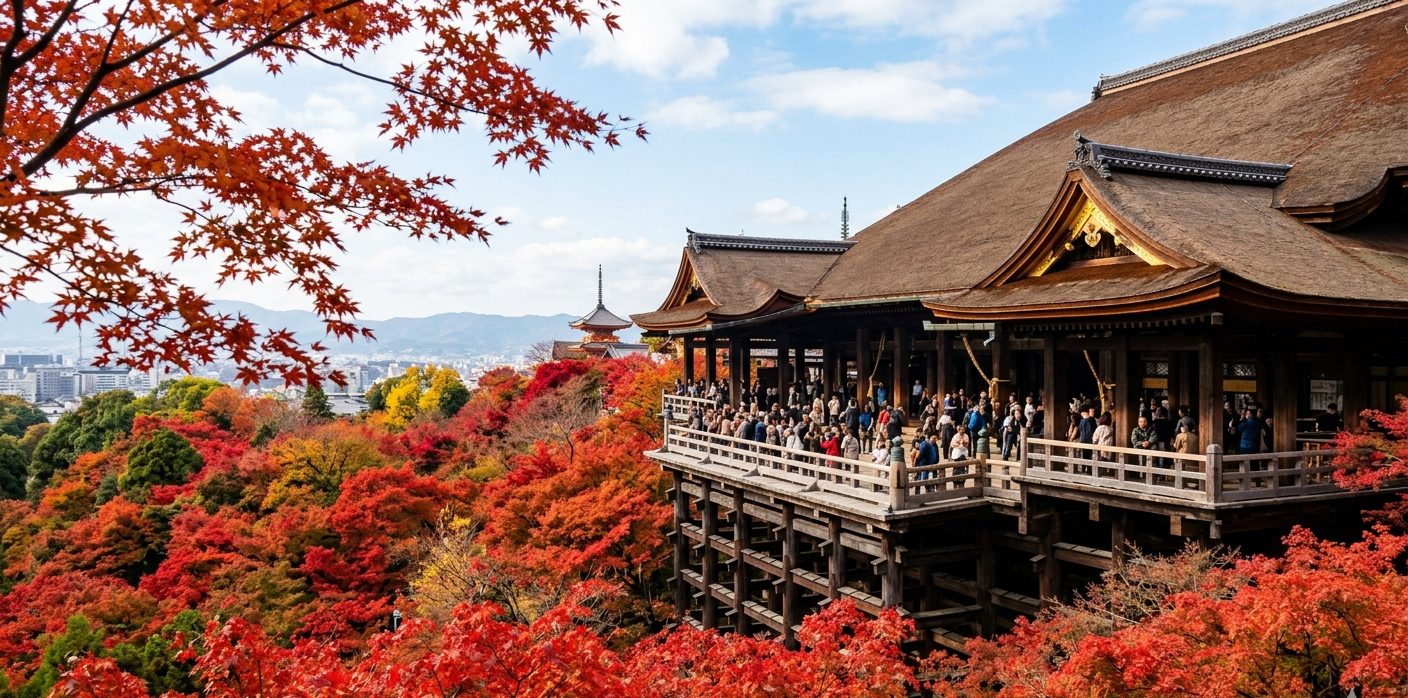
清水寺 · Kiyomizu-dera
Der Tempel thront an einem Hang über der Stadt. Ihr steht auf der großen Holzterrasse, trinkt vom Otowa-Wasserfall, wenn ihr mögt, und schlendert danach durch die Gassen Ninen-zaka und Sannen-zaka.
The temple sits on a hillside above the city. You stand on the great wooden terrace, drink from the Otowa waterfall if you like, and then stroll through the lanes of Ninen-zaka and Sannen-zaka.
TerrasseTerraceWasserfallWaterfall
Euer MomentYour momentDer Blick von der Terrasse über Kyoto.The view from the terrace across Kyoto.
Tag 1 · Station 3 von 12Day 1 · Stop 3 of 12
Gion und Yasaka-SchreinGion and Yasaka Shrine
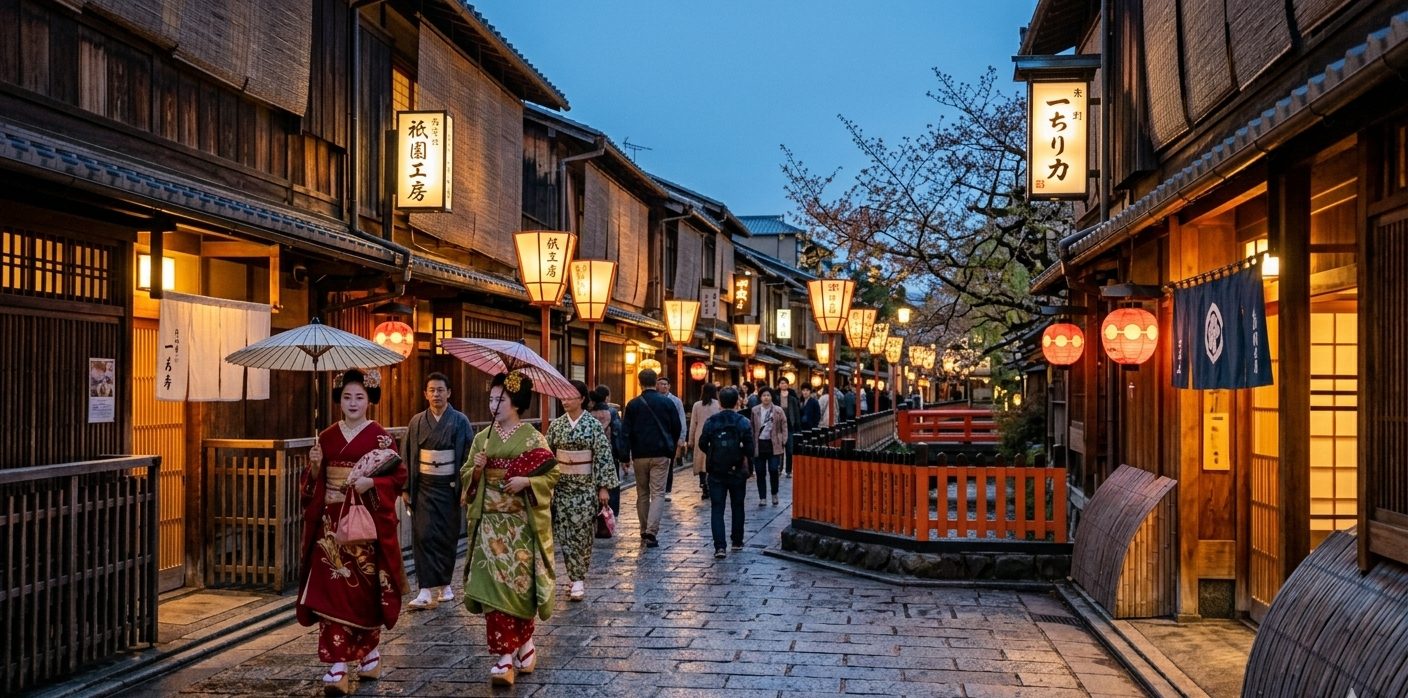
祇園 · Gion
Gion ist das historische Geisha-Viertel von Kyoto. Zwischen alten Holzhäusern und Teehäusern spaziert ihr durch die Gassen und besucht den Yasaka-Schrein, der am Rand des Viertels liegt.
Gion is the historic geisha district of Kyoto. Between old wooden houses and teahouses you stroll through the lanes and visit Yasaka Shrine at the edge of the district.
GeishaGeishaSchreinShrine
Euer MomentYour momentEin Spaziergang durch Gassen, in denen die Zeit stehen geblieben scheint.A walk through lanes where time seems to stand still.
Tag 2 · Station 4 von 12 · Willkommen zurückDay 2 · Stop 4 of 12 · Welcome back
Arashiyama-BambushainArashiyama Bamboo Grove
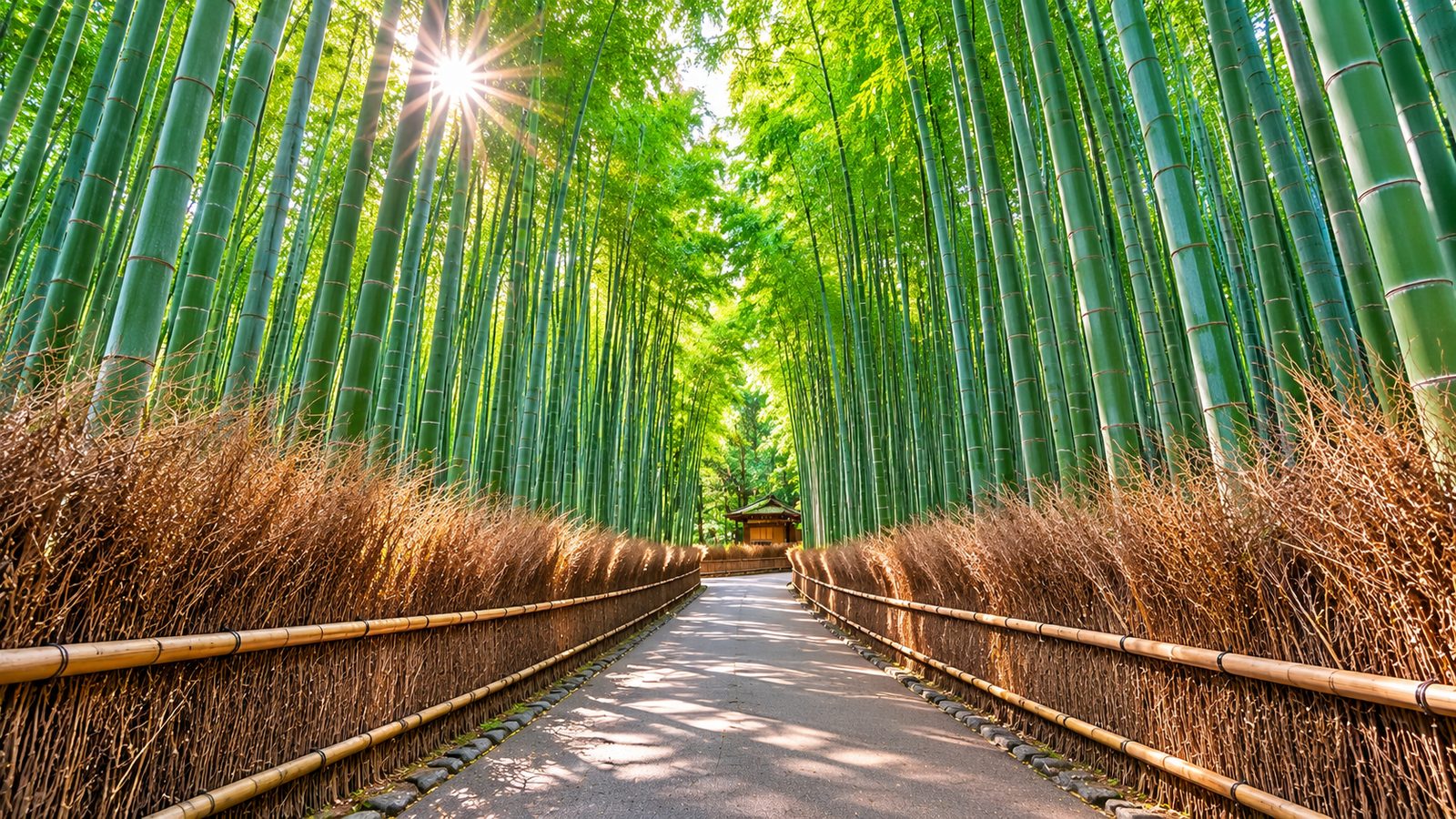
嵐山の竹林 · Arashiyama no chikurin
Am Morgen ist es im Bambushain besonders ruhig. Hohe grüne Halme rauschen über euch, das Licht fällt gefiltert auf den Weg. Ein Spaziergang, bei dem der Alltag weit weg ist.
In the morning the bamboo grove is especially calm. Tall green stalks rustle above you and the light falls softly onto the path. A walk that leaves everyday life far behind.
BambushainBamboo groveRuheCalm
Euer MomentYour momentDer Morgenspaziergang im Bambushain, bevor es voll wird.The morning walk through the bamboo grove before it gets busy.
Tag 2 · Station 5 von 12Day 2 · Stop 5 of 12
Tenryu-jiTenryu-ji
天龍寺 · Tenryū-ji
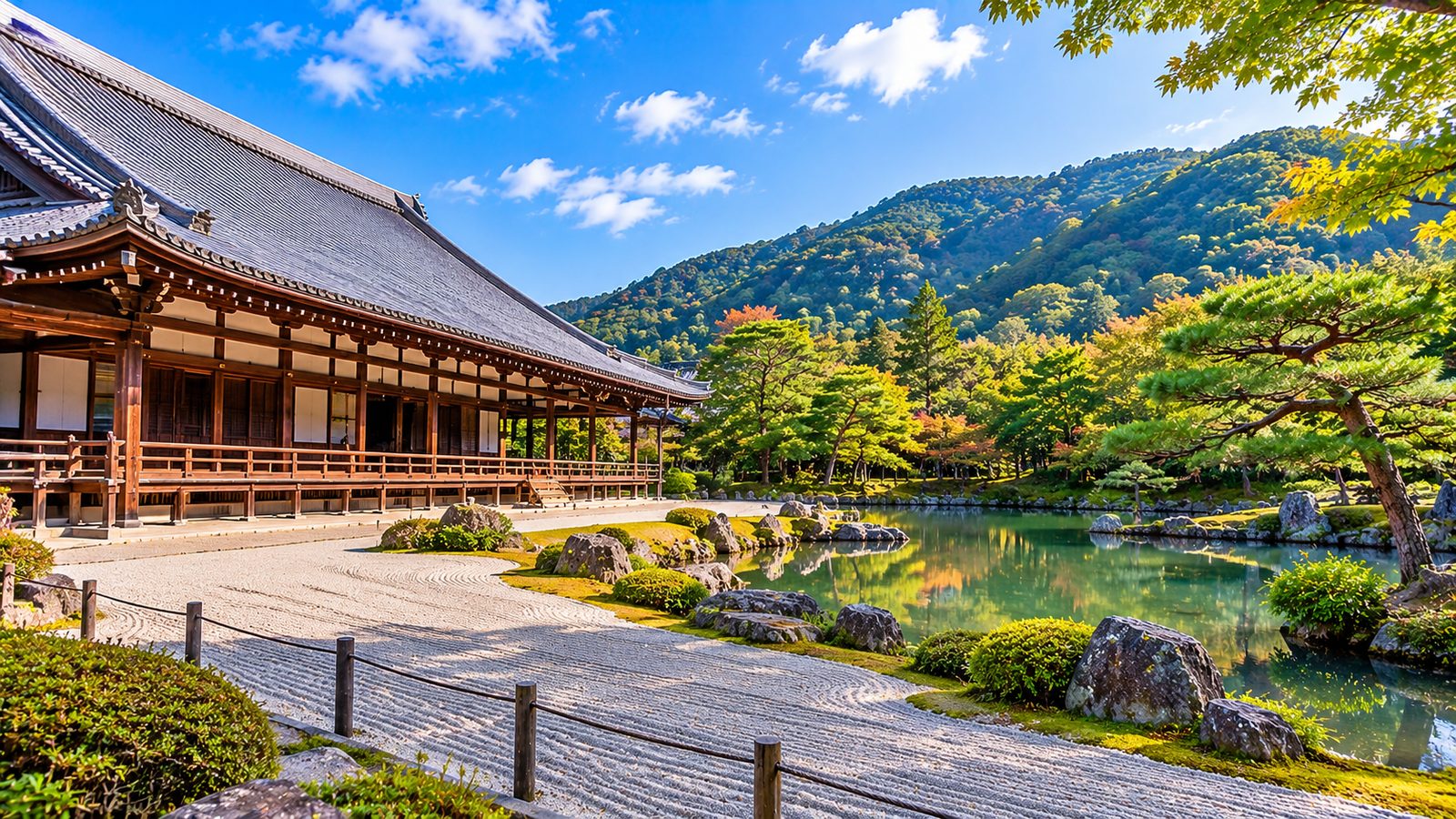
Der Zen-Tempel gehört zum UNESCO-Welterbe. Sein Garten stammt aus dem 14. Jahrhundert und wirkt bis heute so, wie er angelegt wurde: ein Teich, Felsen und der Berg als Kulisse.
This Zen temple is a UNESCO World Heritage site. Its garden dates from the 14th century and still looks the way it was laid out: a pond, rocks and the mountain as a backdrop.
UNESCOUNESCOZen-GartenZen garden
Euer MomentYour momentStille im Zen-Garten aus dem 14. Jahrhundert.Stillness in a Zen garden from the 14th century.
Tag 2 · Station 6 von 12Day 2 · Stop 6 of 12
Kinkaku-ji, der Goldene PavillonKinkaku-ji, the Golden Pavilion
金閣寺 · Kinkaku-ji
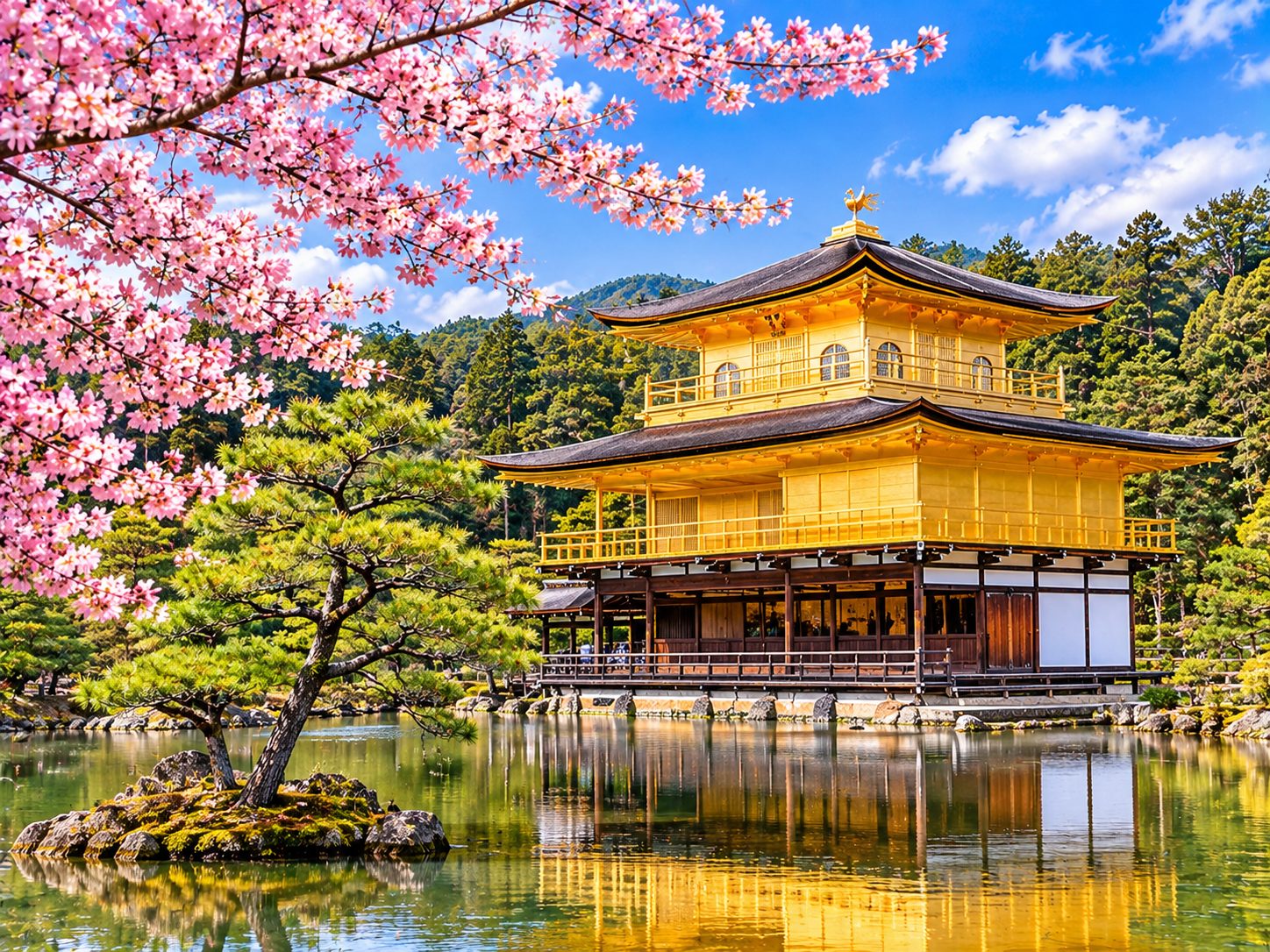
Der Zen-Tempel ist mit Blattgold überzogen und spiegelt sich in einem stillen Teich. Euer Guide erzählt euch, wie der Pavillon entstand und warum er zu den bekanntesten Bildern Kyotos gehört.
This Zen temple is covered in gold leaf and reflected in a still pond. Your guide tells you how the pavilion came to be and why it is one of the best-known images of Kyoto.
PavillonPavilionZen-TempelZen temple
Euer MomentYour momentDer Goldene Pavillon, gespiegelt im Teich.The Golden Pavilion, reflected in the pond.
Tag 2 · Station 7 von 12Day 2 · Stop 7 of 12
Nijo-SchlossNijo Castle
二条城 · Nijō-jō
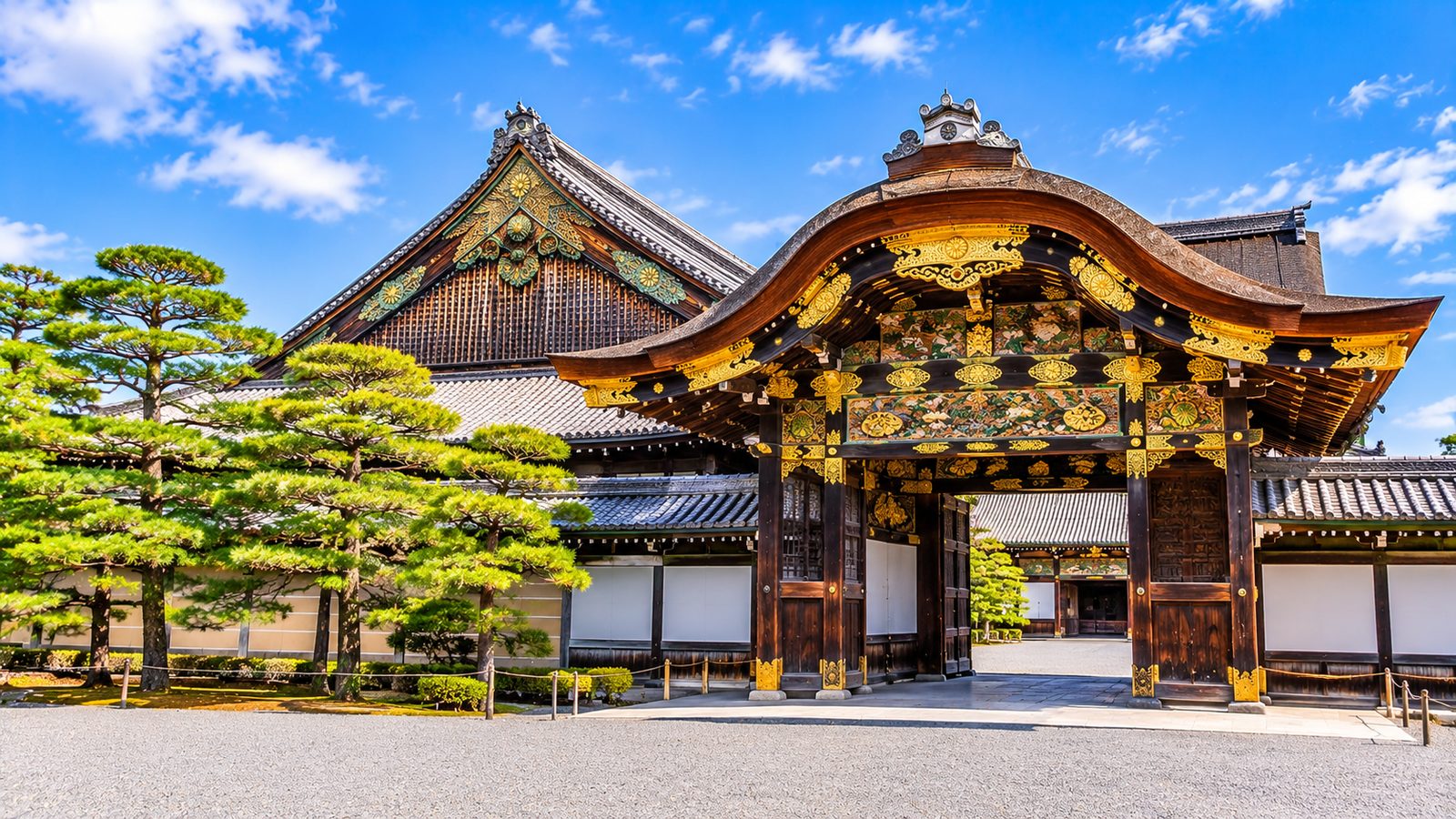
Zum Abschluss besucht ihr das Schloss, das 1603 erbaut wurde. In seinen Fluren knarren die berühmten Nachtigallenböden, und die Schiebetüren sind mit kunstvollen Malereien verziert.
To finish you visit the castle built in 1603. In its corridors the famous nightingale floors creak, and the sliding doors are decorated with elaborate paintings.
SchlossCastleMalereienPaintings
Euer MomentYour momentDer Gang über die Nachtigallenböden.Walking across the nightingale floors.
Tag 3 · Station 8 von 12 · Weiter nach OsakaDay 3 · Stop 8 of 12 · On to Osaka
Schloss OsakaOsaka Castle
大阪城 · Ōsaka-jō
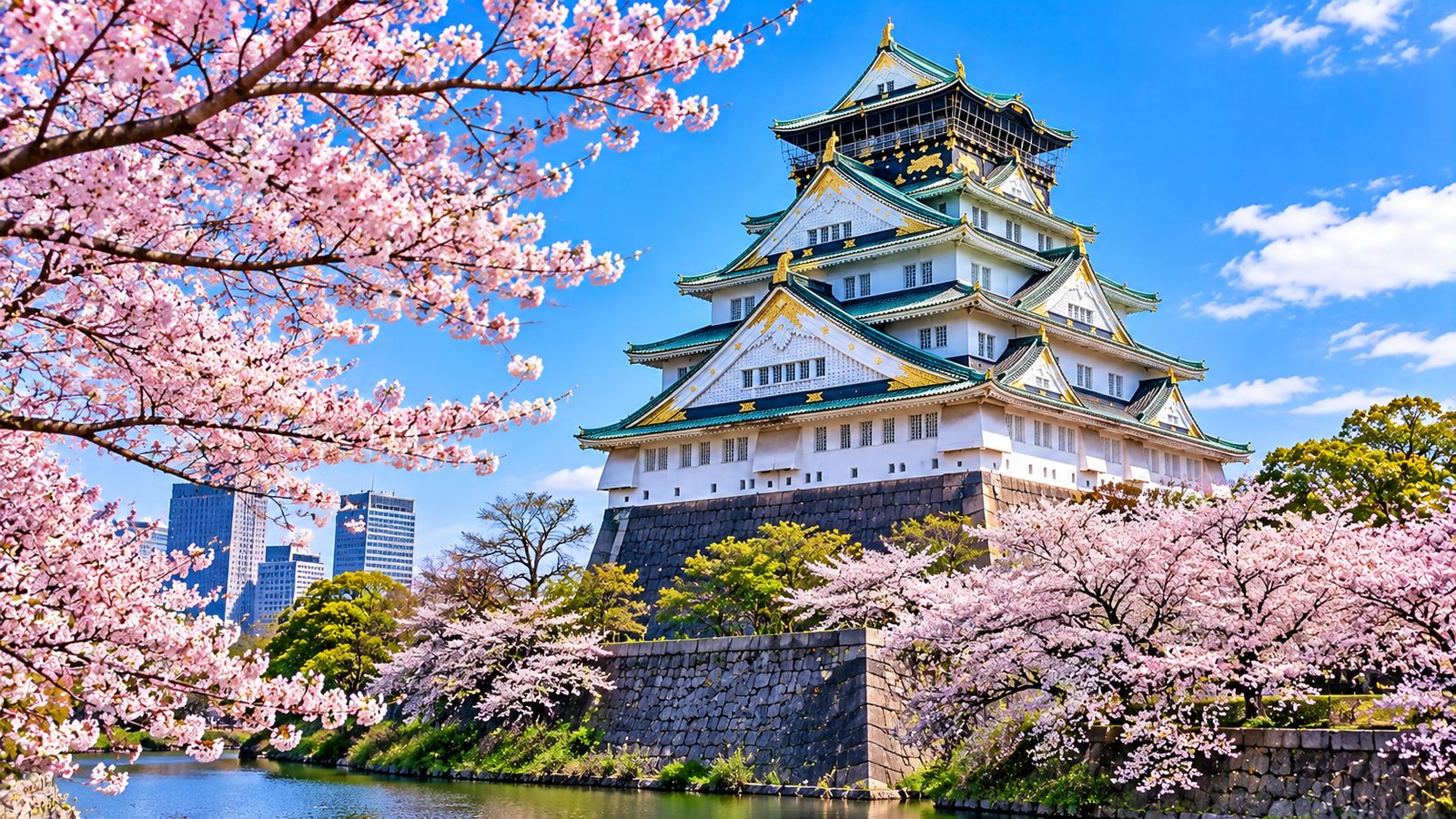
Eine historische Burg mit Blick auf die moderne Skyline: Euer Guide erzählt euch ihre Geschichte. Der umliegende Park lädt zu einem ruhigen Spaziergang und zu Fotos ein.
A historic castle with a view of the modern skyline: your guide tells you its history. The surrounding park invites you to a calm walk and photos.
Burg OsakaOsaka CastleParkPark
Euer MomentYour momentEin Foto vor der Burg, aufgenommen von eurem Guide.A photo in front of the castle, taken by your guide.
Tag 3 · Station 9 von 12Day 3 · Stop 9 of 12
ShinsekaiShinsekai
新世界 · Shinsekai
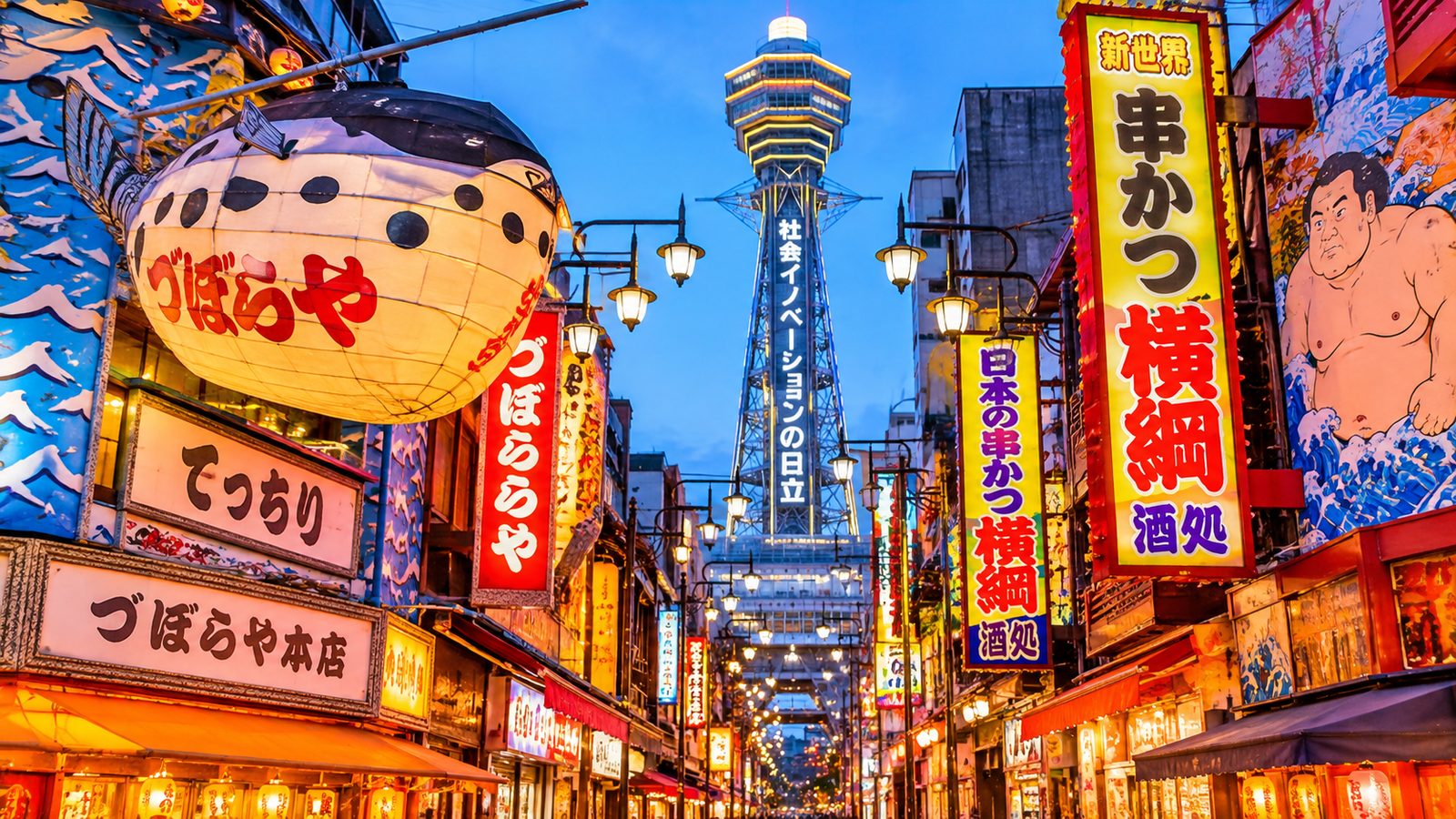
Das Viertel mit dem nostalgischen Charme des alten Osaka, geprägt vom Tsutenkaku-Turm. Hier spürt ihr eine ganz andere Seite der Stadt als in den modernen Zentren.
The district with the nostalgic charm of old Osaka, shaped by the Tsutenkaku Tower. Here you feel a very different side of the city than in the modern centres.
TsutenkakuTsutenkakuGassenAlleys
Euer MomentYour momentDas alte Osaka im Schatten des Turms.Old Osaka in the shadow of the tower.
Tag 3 · Station 10 von 12Day 3 · Stop 10 of 12
Kuromon-MarktKuromon Market
黒門市場 · Kuromon ichiba
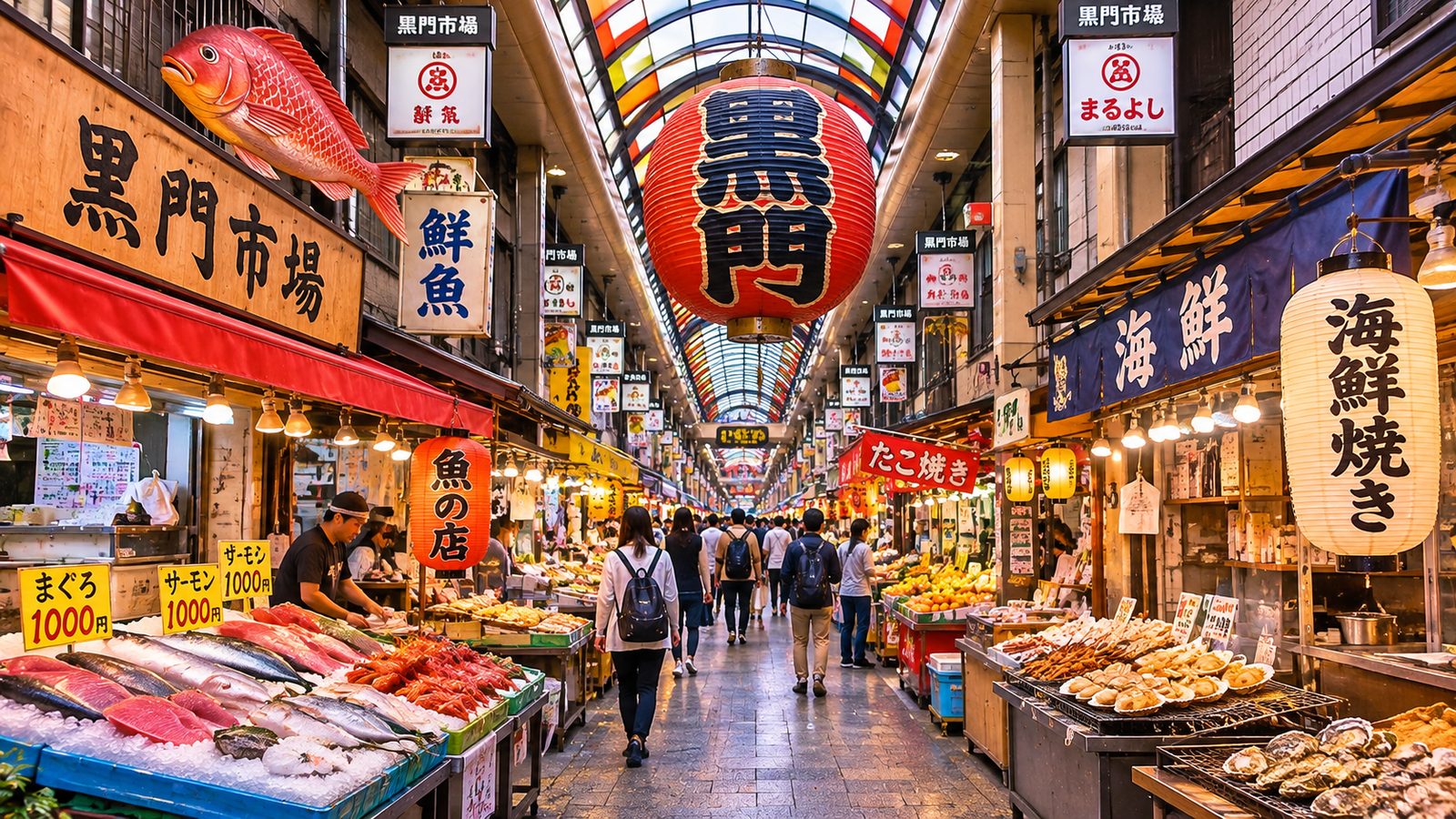
Der lebendige Markt gilt als „Küche von Osaka“. Zwischen frischem Fisch und lokalen Spezialitäten bekommt ihr einen Eindruck davon, wie sehr die Stadt ihr Essen liebt.
The lively market is known as the “kitchen of Osaka”. Between fresh fish and local specialities you get a sense of how much the city loves its food.
FischSeafoodSpezialitätenSpecialities
Euer MomentYour momentEin Bummel durch die Marktgassen.A stroll through the market lanes.
Tag 3 · Station 11 von 12Day 3 · Stop 11 of 12
Dotonbori und NambaDotonbori and Namba
道頓堀 · Dōtonbori
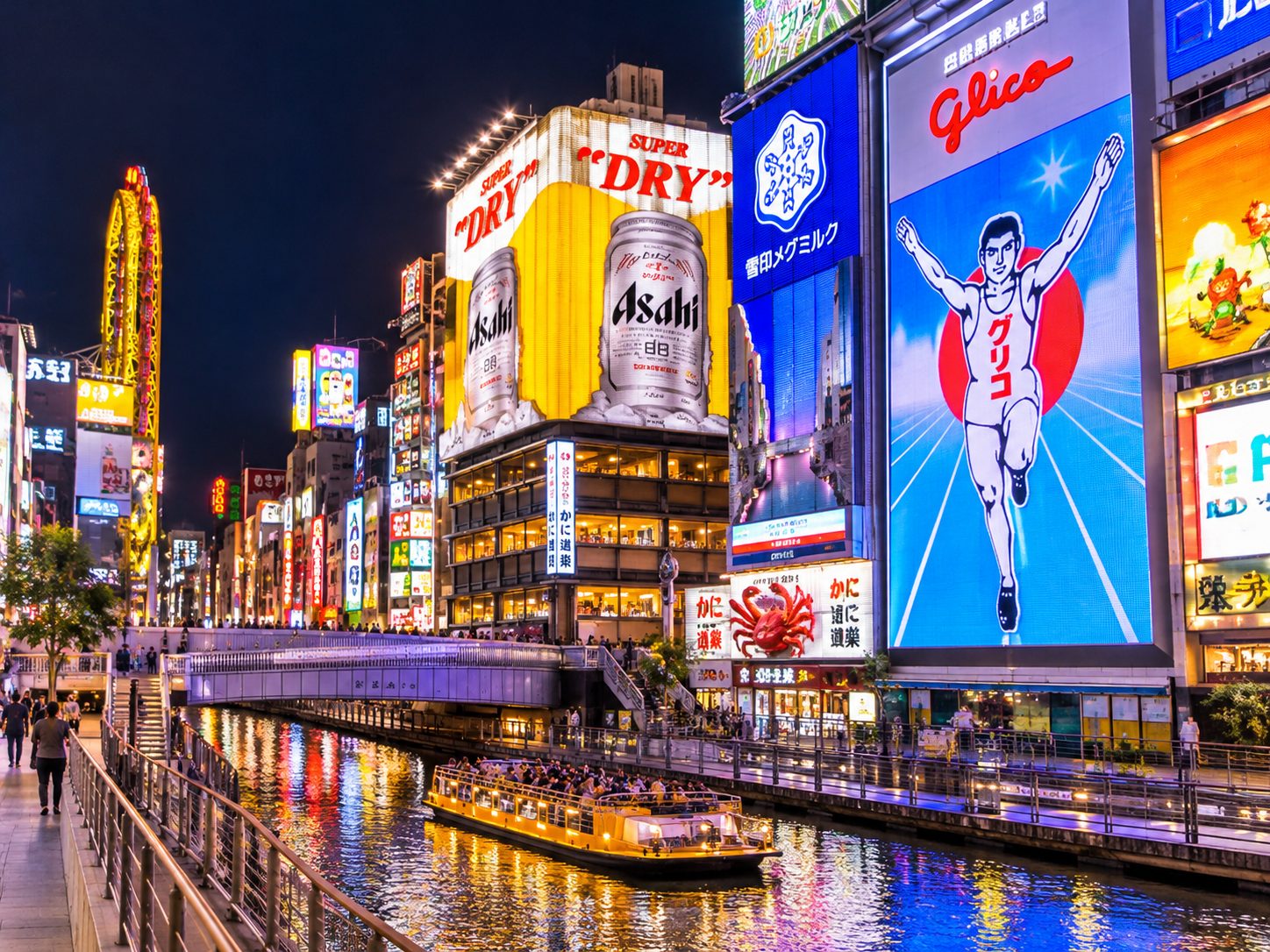
Das pulsierende Zentrum: bunte Neonreklamen am Kanal, das Foto mit dem Glico-Mann und Streetfood an jeder Ecke. Hier zeigt sich Osaka von seiner lautesten und lebendigsten Seite.
The pulsating centre: colourful neon signs along the canal, the photo with the Glico Man and street food on every corner. Here Osaka shows its loudest and liveliest side.
NeonNeonStreetfoodStreet food
Euer MomentYour momentDas berühmte Foto mit dem Glico-Mann.The famous photo with the Glico Man.
Tag 3 · Station 12 von 12Day 3 · Stop 12 of 12
Modernes UmedaModern Umeda
梅田 · Umeda
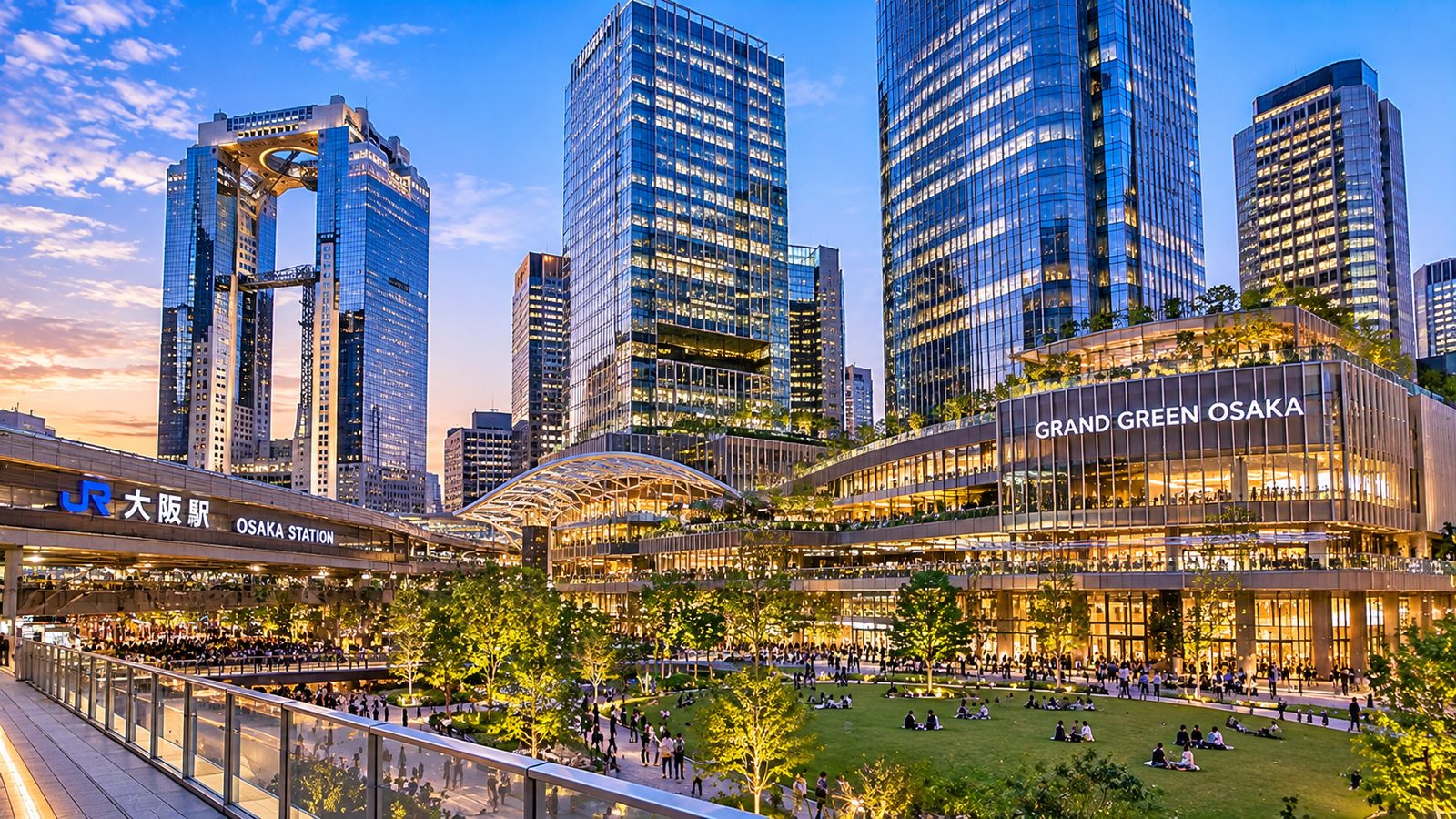
Zum Abschluss das moderne Osaka: Shoppingviertel und Architektur. Vom Umeda Sky Building habt ihr einen Rundblick über die Metropole.
To finish, modern Osaka: shopping districts and architecture. From the Umeda Sky Building you have an all-round view over the metropolis.
RundblickPanoramaShoppingShopping
Euer MomentYour momentDer Rundblick über Osaka.The panoramic view over Osaka.